





Estimated reading time: 4 minutes
YUGEN REALTY, SURAT
Designing your home should be exciting, but for first-time homeowners, it can be overwhelming.
With so many options online and inspiration from social media, it can be overwhelming to know where to start or how to make the right choice.
Meeting with an interior designer can help, but being prepared will make the experience easier and more productive.
Here are five essential steps to take before your first design meeting, so you’re ready to make confident decisions about your new space (office or home).

1. Identify your needs Vs. wants
Before diving into the design process, it’s important to know the difference between what you really need and what you want. Needs are essentials — like having enough storage or making sure it’s durable — while wants are extras, like high-end finishes or a luxury master bathroom. Knowing this difference helps you tailor your project to your lifestyle and budget.
PRO-TIP
Make a list of the essentials for your home, considering functional needs like storage that meets your kitchen needs or materials that are easy to clean.
Create a separate wish list of items that you would love but would skip if necessary to stay within your budget.
This little exercise and approach will help your designer focus on the key elements while balancing optional features based on your preferences and budget.
2. Think long-term : Consider future changes
A home is a long-term investment, and your needs may not be the same five or ten years from now. Thinking about future changes, such as starting a family or setting up a home office, can help you design spaces that adapt over time.
PRO-TIP
Think about how your family or lifestyle might evolve. For example, if you’re planning on having children, consider child-friendly spaces or storage solutions.
If you’re single but thinking about a future spouse or roommates, you may want to design with flexibility in mind, such as multi-functional rooms or extra storage.
Making your home adaptable to future changes can save you time and money on future renovations.
3. Understand your lifestyle needs
Party vs. Private Lifestyle How you use your space can greatly influence the design. Do you like to host party-gathering gatherings, or do you prefer a quieter, more private setting? Your lifestyle preferences can help determine the layout and room distribution.
PRO-TIP
Daily Use vs. Privacy
If you enjoy hosting, you may want an open-concept kitchen and living area that’s easy to socialize.
If you value privacy, you may want separate spaces or a cozy, secluded living room.
Also, consider how many people will be in the home on a regular basis. More people may mean extra storage, more bathrooms, or larger living spaces.
4. Set a realistic budget with flexibility
Standard vs. Desired Budget: Setting a budget is essential, but it’s equally important to have some flexibility. Talk to your designer about your standard budget and any areas where you’re open to spending a little more.
PRO-TIP
Budget Breakdown
Laminate vs. Veneer: Laminate is a more affordable and durable option, while veneer offers a natural wood finish but comes at a higher price.
Manual vs. Automated Features: Automatic lighting or blinds may cost you more, as they are more expensive. Consider whether this investment is in line with your priorities.
Tiles vs. Stone and Texture vs. Wallpaper: Tiles offer versatility and durability, while stone offers a more premium look. Wallpapers can add richness to a space, but textured walls are less expensive.
Based on these options, your designer can help you make material choices that suit both your budget and desired style.
5. Apply a rule of thumb for budgeting
Budgeting Tips A simple budgeting rule can help you stay within limits without sacrificing style. Set aside a small contingency fund – often as little as 10-15% of your budget – for unexpected expenses or upgrades you may need during the process.
PRO-TIP
For example :
Start with a base amount that covers the essentials. For example, plan for basic elements like flooring, paint, and lighting in a standard budget.
For luxury features or specific upgrades, decide whether you will cover these now or in a future phase. This phased approach can help if you have a tight budget but have a long-term vision.
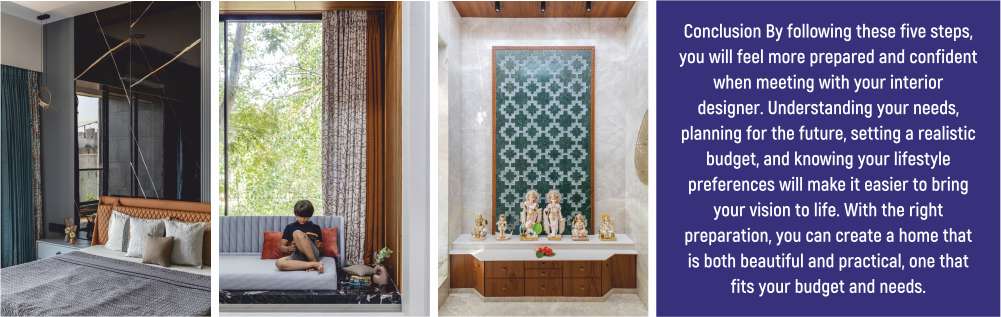
______________________________________________________
Disclaimer : This information has been collected through secondary research and Yugen Realty Newspaper is not responsible for any errors in the same.
Read more news including local, national, international, business on Yugen Realty Newspaper. Join us on social media to stay updated with the latest news.
FACEBOOK | INSTAGRAM | LINKEDIN | TWITTER | PINTEREST | YOUTUBE | WhatsApp Channel | Telegram
More News :
Related Posts

Architect Jitendra Patel Designer Par Excellence
This Year Ends With New Vigor And New Direction For The Development of Surat